Regular AC inspections are essential for keeping your cooling system running efficiently and avoiding costly breakdowns. A thorough inspection should happen twice yearly (spring and fall) and includes checking the air filter, examining the outdoor unit for debris and damage, testing the thermostat, inspecting electrical connections, measuring refrigerant levels, cleaning condenser coils, checking drain lines, and listening for unusual noises. While homeowners can handle basic checks like filter changes and visual inspections, professional technicians should perform detailed assessments annually to catch problems early. At Pro Degree, we provide expert AC inspection services throughout the Pittsburgh area, offering 24/7 emergency support to keep your home comfortable year-round.
Why AC Inspections Actually Matter
Most people don’t think about their air conditioning system until it stops working. You flip the switch on the first hot day of summer, expecting cool air, and instead you get nothing. Or worse, you get warm air and a repair bill that could’ve been avoided with a simple inspection.
Regular AC inspections aren’t just about preventing that nightmare scenario, though that’s certainly a big benefit. They’re about saving money on energy bills, extending the life of your equipment, maintaining healthy indoor air quality, and catching small problems before they become expensive emergencies.
Think of it like taking your car in for an oil change. You could skip it and hope for the best, but eventually that neglect catches up with you. Your AC system works the same way. It runs for months at a time, often in harsh conditions, and it needs regular attention to perform at its best.
A well-maintained air conditioner uses less energy to cool your home, which directly lowers your utility bills. It also lasts longer, meaning you can delay the expensive replacement cost for years. And when your system is clean and properly maintained, it circulates cleaner air throughout your home, which matters for anyone with allergies or respiratory issues.
How Often Should You Inspect Your AC?
The simple answer is twice a year at minimum. You should do a basic inspection in spring before you start using your AC heavily, and another one in fall before you switch over to heating. This twice-yearly schedule catches problems that develop during the off-season and ensures your system is ready when you need it.
Beyond these seasonal checks, you should also do quick visual inspections monthly during cooling season. This doesn’t need to be anything elaborate. Just take a few minutes to look at your outdoor unit, check your air filter, and make sure everything seems normal. These quick checks can alert you to developing problems before they cause a breakdown.
Professional inspections should happen at least once a year, ideally in spring before summer heat arrives. A trained technician can spot issues that you might miss and perform maintenance tasks that require special tools or expertise. Many homeowners sign up for annual maintenance agreements that include these professional inspections plus priority service if something goes wrong.
What Homeowners Can Check Themselves
You don’t need to be an HVAC expert to perform basic AC inspections. There are several things you can and should check regularly to keep your system running smoothly.
Air Filter Inspection and Replacement
This is the single most important thing you can do for your AC system. The air filter traps dust, pollen, pet dander, and other particles before they enter your system. When the filter gets clogged, your AC has to work harder to pull air through, which wastes energy and puts stress on components.
Check your filter monthly during cooling season. Hold it up to a light. If you can’t see light passing through clearly, it’s time to replace it. Some filters are reusable and just need cleaning, while others should be thrown away and replaced with new ones. Check your owner’s manual to see which type you have.
Most homes need filter changes every 30 to 90 days depending on several factors. If you have pets, you’ll need more frequent changes. Same if you run your system constantly or if anyone in your home has allergies. Homes without pets and with minimal system use can sometimes go longer between changes.
Outdoor Unit Visual Inspection
Your outdoor condenser unit sits outside in all weather conditions, which means it takes a beating. Walk outside and take a good look at it every month or so.
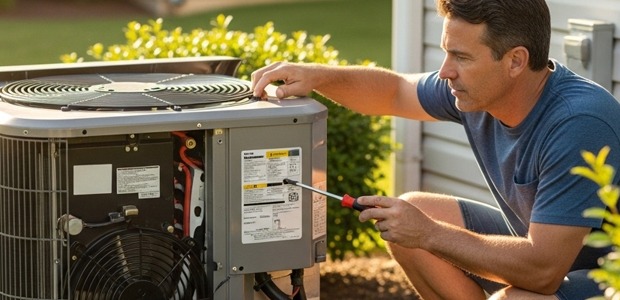
Check for debris around the unit. Leaves, grass clippings, dirt, and other outdoor debris can accumulate around and inside the unit, blocking airflow. Clear away anything within two feet of the unit. If you see debris inside the fins or coils, you can carefully remove larger pieces by hand or use a garden hose on low pressure to rinse them away.
Look for physical damage. Hail, falling branches, lawn equipment, or even curious animals can damage the unit. Check for bent fins, dents in the housing, or damaged wiring. Bent fins restrict airflow and should be straightened, though this is best left to professionals who have the right tools.
Inspect for signs of refrigerant leaks. If you see oily residue on or around the unit, or if ice is forming on the refrigerant lines during operation, these could indicate a leak. Refrigerant leaks require professional repair.
Thermostat Testing
Your thermostat controls when your AC runs, so it needs to work correctly. Test it periodically by setting it a few degrees below the current temperature and listening to make sure your system kicks on. Then set it back to your preferred temperature.
Make sure your thermostat is level. A tilted thermostat can give false temperature readings, causing your system to run too much or not enough. Check the batteries if you have a battery-powered model. Weak batteries can cause erratic behavior.
If you have an older mechanical thermostat, gently remove the cover and use a soft brush or compressed air to clean away any dust buildup. Dust on the sensors can affect accuracy.
Register and Vent Checks
Walk through your home and make sure all your supply vents (where cool air comes out) and return vents (where air gets pulled back into the system) are open and unobstructed. Furniture, curtains, rugs, and other items can block vents without you realizing it.
Blocked vents force your system to work harder and can create pressure imbalances that strain components. Every vent should have clear airflow with nothing within a foot or two blocking it.
Condensate Drain Line Inspection
Your AC produces condensation as it removes humidity from the air. This water needs to drain away through a small pipe or tube, usually near your indoor unit. Check this drain line periodically to make sure water is flowing freely and not backing up.
You can pour a cup of water into the drain pan to test the line. The water should drain away quickly. If it doesn’t, the line might be clogged with algae or debris. A clogged drain line can cause water damage and trigger safety shutoffs that prevent your AC from running.
What Professionals Check During Inspections
While homeowners can handle basic checks, professional technicians perform more detailed inspections that require expertise and specialized tools.
Electrical Components and Connections
AC systems use electricity to power motors, compressors, and fans. Over time, electrical connections can loosen, wires can fray, and components can wear out. Technicians check all electrical connections, tighten loose terminals, test capacitors that help motors start and run, inspect contactors that switch power on and off, and measure voltage and amperage to ensure everything operates within proper ranges.
Electrical problems often show warning signs before they cause complete failure. A professional inspection catches these signs early, preventing breakdowns and potential fire hazards.
Refrigerant Levels
Refrigerant is the chemical that actually absorbs heat from your indoor air and releases it outside. Your AC system should maintain the same refrigerant charge for its entire life, but leaks can develop that reduce the charge.
Technicians use special gauges to measure refrigerant pressure and temperature. If levels are low, they’ll check for leaks, repair them, and recharge the system to the proper level. Running with low refrigerant damages your compressor and dramatically reduces efficiency.
Condenser and Evaporator Coil Cleaning
Your AC has two sets of coils. The condenser coils are in the outdoor unit, and the evaporator coils are in the indoor unit. Both need to be clean for efficient operation.
Dirty coils can’t transfer heat effectively, which makes your system work harder and use more energy. Professional cleaning removes dirt, dust, pollen, and other buildup that regular homeowner maintenance can’t address. This often involves removing panels, using special cleaners, and carefully cleaning delicate fins without damaging them.
Blower Motor and Fan Inspection
The blower motor circulates air through your home, while the condenser fan moves air across the outdoor coils. Both need to run smoothly and quietly.
Technicians lubricate motors if needed, check belts for wear and proper tension, inspect fan blades for damage or imbalance, and measure motor performance to ensure efficient operation. A struggling motor uses excess electricity and will eventually fail if not addressed.
Ductwork Assessment
While not always part of a standard AC inspection, checking your ductwork is important for system efficiency. Leaky ducts waste cooled air before it reaches your living spaces, sometimes losing 20% to 30% of your cooling capacity.
Technicians can inspect accessible ductwork for leaks, disconnected sections, inadequate insulation, and crushed or damaged sections. Sealing and insulating ducts improves comfort and reduces energy costs.
Creating Your AC Inspection Schedule
The best approach combines regular homeowner checks with professional service.
Here’s a practical schedule that balances effort with effectiveness:
Monthly during cooling season:
- Check and replace air filter if needed
- Visual inspection of outdoor unit
- Clear debris from around outdoor unit
- Check that all vents are open and unobstructed
- Test thermostat operation
Spring (before cooling season starts):
- Complete all monthly checks
- Clean outdoor unit with hose if needed
- Test condensate drain line
- Schedule professional inspection and tune-up
Fall (before heating season starts):
- Complete all monthly checks
- Cover or protect outdoor unit if recommended for your area
- Replace thermostat batteries
Annual professional service:
- Complete system inspection
- Refrigerant check and adjustment if needed
- Electrical testing and repairs
- Coil cleaning
- Motor lubrication
- Performance testing
This schedule ensures your system gets attention throughout the year while focusing the most intensive work in spring when professionals prepare your system for its busiest season.
Warning Signs That Need Immediate Attention
Between regular inspections, watch for these warning signs that indicate your AC needs professional attention right away:
- Weak or no airflow from your vents suggests problems with the blower motor, ductwork, or a severely clogged filter. Don’t ignore this. Operating with restricted airflow can damage your system.
- Warm air blowing from vents when the AC is running points to refrigerant leaks, compressor problems, or thermostat issues. Your system might be running but not actually cooling.
- Strange noises like grinding, squealing, banging, or rattling usually mean mechanical problems. Grinding suggests bearing failure. Squealing often indicates belt issues. Banging can mean loose or broken parts.
- Unusual odors require immediate investigation. Burning smells could indicate electrical problems. Musty odors suggest mold growth in your ductwork or drain pan. Chemical smells might mean refrigerant leaks.
- Water leaks around your indoor unit mean your condensate drain is clogged or your drain pan is damaged. Water can cause significant damage to your home if not addressed quickly.
- Frequent cycling on and off suggests your system is struggling. This could be caused by refrigerant problems, thermostat issues, or an oversized unit.
- High energy bills without increased usage often indicate your AC is working harder than it should due to dirty coils, low refrigerant, or failing components.
The Cost of Skipping Inspections
Neglecting AC inspections might seem like a way to save money, but it almost always costs more in the long run. Here’s what happens when systems don’t get regular attention:
Energy costs climb as dirty components force your system to work harder. A system with dirty coils can use 30% more electricity to provide the same cooling. Over a summer, that adds hundreds of dollars to your utility bills.
Minor problems become major repairs. A $150 capacitor replacement becomes a $1,500 compressor replacement when the failing capacitor damages the compressor. Regular inspections catch these minor issues before they cascade.
System lifespan decreases significantly. A well-maintained AC should last 15 to 20 years. A neglected system might fail after just 10 years. When you consider replacement costs of $3,000 to $7,000 or more, the value of maintenance becomes crystal clear.
Unexpected breakdowns happen at the worst times. Your AC is most likely to fail during its heaviest use, which means the hottest days of summer. Emergency repairs cost more than scheduled service, and you might wait days for service during peak season.
DIY Maintenance vs. Professional Service
Some homeowners wonder if they can handle all their AC maintenance themselves. While basic checks and filter changes are definitely DIY-friendly, professional service provides value that you can’t replicate on your own.
Professionals have specialized tools for measuring refrigerant pressure, testing electrical components, and cleaning coils thoroughly. They have the training to spot problems that aren’t obvious to homeowners. They know what’s normal and what’s concerning for different types of systems.
Perhaps most importantly, professionals can perform repairs safely. Working with refrigerants requires EPA certification. Electrical work can be dangerous without proper training. And mistakes can damage expensive components or create safety hazards.
The best approach is doing what you can do safely and effectively (filter changes, basic cleaning, visual checks) while leaving technical work to trained technicians. This combination provides the best results at the most reasonable cost.
Choosing the Right Service Provider
When you’re ready to schedule professional AC service, choosing the right company matters. Look for providers who are properly licensed and insured, have trained and certified technicians, offer transparent pricing with written estimates, provide emergency service when needed, and stand behind their work with guarantees.
At Pro Degree, we provide expert AC inspection and maintenance services throughout the Pittsburgh area. Our technicians are trained to work with all major brands and types of cooling systems. We perform thorough inspections, explain what we find in plain language, and provide honest recommendations without pressure tactics.
We offer 24/7 emergency service because we know AC problems don’t respect business hours. When your cooling fails during a heat wave, we respond quickly to get you comfortable again. And our maintenance programs make it easy to keep your system in top shape year after year.
Taking Action Today
 Don’t wait until your AC fails to give it the attention it needs. Start with a simple inspection you can do yourself right now. Check your air filter, look at your outdoor unit, and test your thermostat. These basic checks take just a few minutes and can alert you to problems that need attention.
Then schedule a professional inspection if you haven’t had one in the past year. Professional service catches problems you might miss and performs maintenance that keeps your system running efficiently. The small investment in regular maintenance pays for itself many times over through lower energy bills, fewer repairs, and longer equipment life.
Your AC system works hard to keep your home comfortable during Pittsburgh’s hot, humid summers. Give it the care it needs, and it will reward you with reliable, efficient cooling for years to come.